What happens on a typical call
The AI receptionist greets the caller with your business name and asks how it can help. It answers common questions, like your hours, the areas you serve and the services you offer, then gathers what you’d ask yourself: the caller’s name, number, address and the type of job. If it’s a fit, it books the appointment on your calendar. You get a full log of the call in your dashboard, so you walk into the job already knowing the details.
Built around your business, in your voice
Before it takes a single call, we learn how your business runs: your services, hours, service area and the questions customers always ask. Then we script the assistant in your tone and connect it to your phone number and calendar. A plumber’s receptionist should sound different from a dental office’s, and we set it up so questions it hasn’t been taught get taken down as a message for you rather than guessed at.
Knowing when to hand off to you
Some calls need a person: a burst pipe, an unhappy customer, a big commercial bid. You decide what counts as urgent. Those calls get routed straight to you, or taken as a detailed message when you can’t answer. The AI receptionist handles the routine calls that eat your day, and you stay in charge of the ones that matter most.
Nights, weekends and emergencies
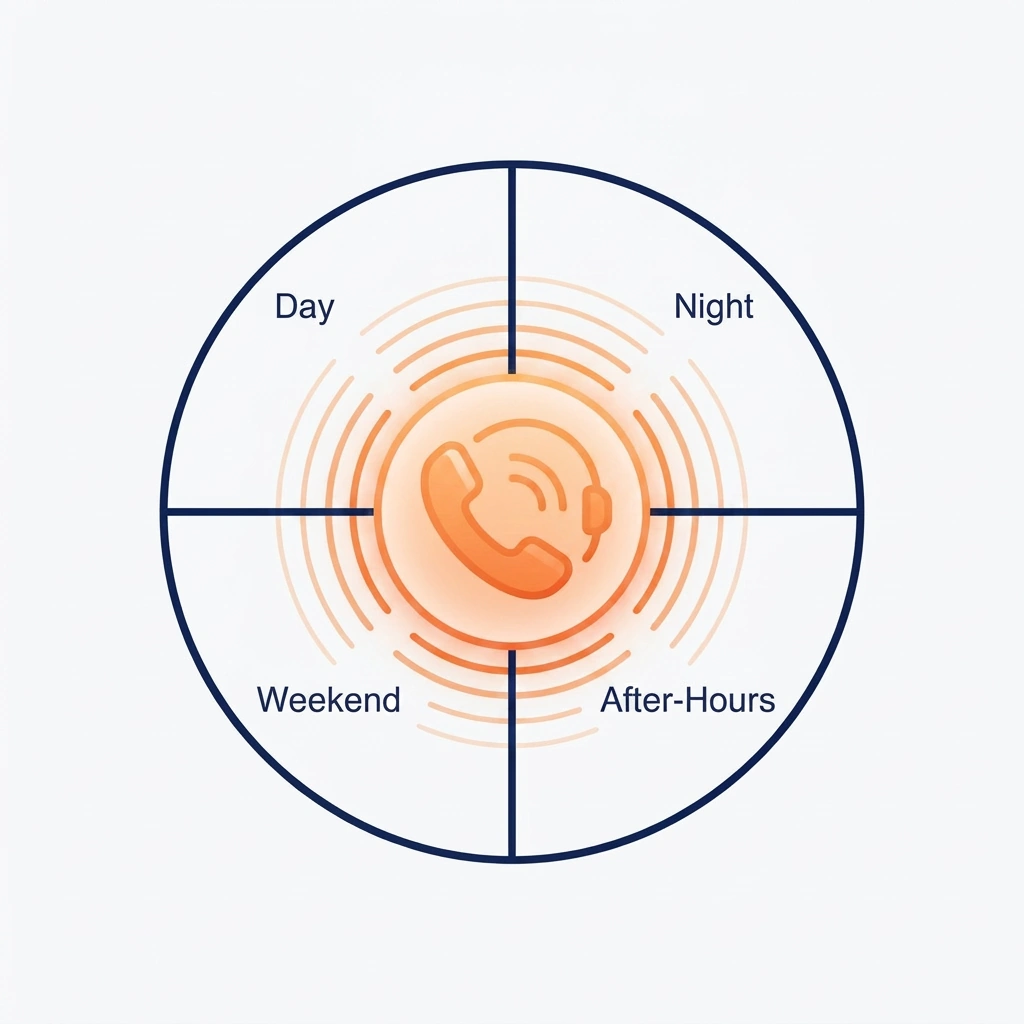
Customers search when the problem happens, and a lot of problems happen after 5 p.m. A leaking water heater on a Sunday or a dead AC on a summer evening sends people straight to their phones, and the first business that answers usually gets the job. An AI receptionist answers 24/7, including holidays, so after-hours calls become booked jobs instead of voicemails you return the next morning.
AI receptionist vs answering service vs hiring
A full-time receptionist is the gold standard, but the median US receptionist earns about $38,000 a year before payroll taxes and benefits, and still works set hours. A traditional answering service puts a live person on the line, usually billed by the minute or the call, and typically takes messages rather than booking jobs. An AI receptionist answers every call at once, around the clock, books straight to your calendar, and costs a flat monthly fee.
What it costs
Our AI Receptionist is $300 a month as an add-on to any plan, and it’s included in our Dominate plan. AI replies and texts carry small usage fees on top. Most owners judge it the simple way: if it books one or two jobs a month you’d otherwise have missed, it has paid for itself. Every call is logged, so you can check that against real numbers. See all plans on our pricing page.
Pairs with Missed Call Text Back
The AI Receptionist answers the calls you can’t take. Missed Call Auto Text Back is the lighter option: it texts anyone whose call went unanswered. Some owners start with text back and move up as call volume grows. Others run the AI Receptionist with appointment scheduling so every booking lands on one calendar with reminders.
Who uses an AI receptionist
It fits any business where the phone rings while the owner’s hands are full: plumbers, HVAC companies, electricians, roofers, landscapers and drainage contractors, plus dental offices and auto repair shops when the front desk is busy. It works best alongside the calls you already earn from local SEO and your Google Business Profile, because more visibility means more calls to answer.
Common questions about AI receptionists
What is an AI receptionist?
An AI receptionist is an automated assistant that answers your business phone in a natural, conversational voice. Callers speak normally instead of pressing buttons, and it answers common questions, gathers their details, books appointments on your calendar and passes urgent calls to you.
How much does an AI receptionist cost?
Our AI Receptionist is $300 a month as an add-on to any plan, and it's included in our Dominate plan. AI replies and texts carry small usage fees. For comparison, the median US receptionist earns about $38,000 a year before payroll taxes and benefits.
Can the AI receptionist book appointments on my calendar?
Yes. It collects the caller's name, the type of job and the details you need, then books the appointment straight onto your calendar. Every call is logged in your dashboard so you can see what was booked and why.
What happens with emergency or complicated calls?
Urgent or complex calls are routed to you, or taken as a detailed message if you can't pick up. You decide which situations count as urgent when we set it up.
Is an AI receptionist worth it for a small business?
If you regularly miss calls while you're on a job, after hours or on weekends, usually yes. It costs a fraction of a staff member and answers every call, so one or two extra booked jobs a month can cover it. If your phone rarely rings when you can't answer, Missed Call Text Back may be all you need.